

%201.png)


Downing Renewable Development's approach to site selection in the UK

Downing Renewable Developments (DRD) is developing thousands of megawatts of solar, battery storage and onshore wind projects to help accelerate the UK’s transition to net zero. We are committed to developing utility-scale renewable energy projects that are environmentally responsible, as well as technically and commercially viable.
Our land use and biodiversity commitment
Renewable energy infrastructure in the UK, whether it be solar, onshore wind or other technologies, requires thoughtful land use planning to balance the competing interests of energy generation, environmental stewardship and food production. Despite the growth in capacity targets, the total land footprint of renewables remains modest relative to energy output. For example, even with the proposed significant expansion, solar alone is projected to occupy less than 1% of UK land by 2050.1
In line with the National Policy Statement for Renewable Energy (EN-3), DRD champions sustainable land stewardship across all our renewable developments. We avoid Best and Most Versatile (BMV) land where possible, ensuring that high-quality farmland remains available for agricultural use, such as food production. If project development is done on agricultural land, environmental risks are mitigated by our projects being temporary in nature, typically lasting 40 years, which allows for future land restoration or reuse. Additionally, by allowing agricultural land to rest during this interim period, our projects contribute to improved soil health and long-term land resilience. DRD has sought to maximise Biodiversity Net Gain on all our projects, even prior to the mandatory 10% net gain requirement established in February 2024. According to the Department for Energy, Food and Rural Affairs (DEFRA) Food Security Report, climate change and biodiversity loss are among the greatest threats to long-term food security.2 DRD’s projects seek to address both, contributing to the UK’s legally binding net zero goals whilst addressing loss in biodiversity, taking direction from our ESG experts led by Hannah Picknett, Sustainability Lead.
For example, on our scheme at Limes Farm - the project area was strategically adjusted to minimise the extent of BMV land use as far as practicable. This approach ensured that over 50% of the site was designated as Grade 3b (non-BMV), with the remainder comprising of Grade 3a and Grade 2 classifications.
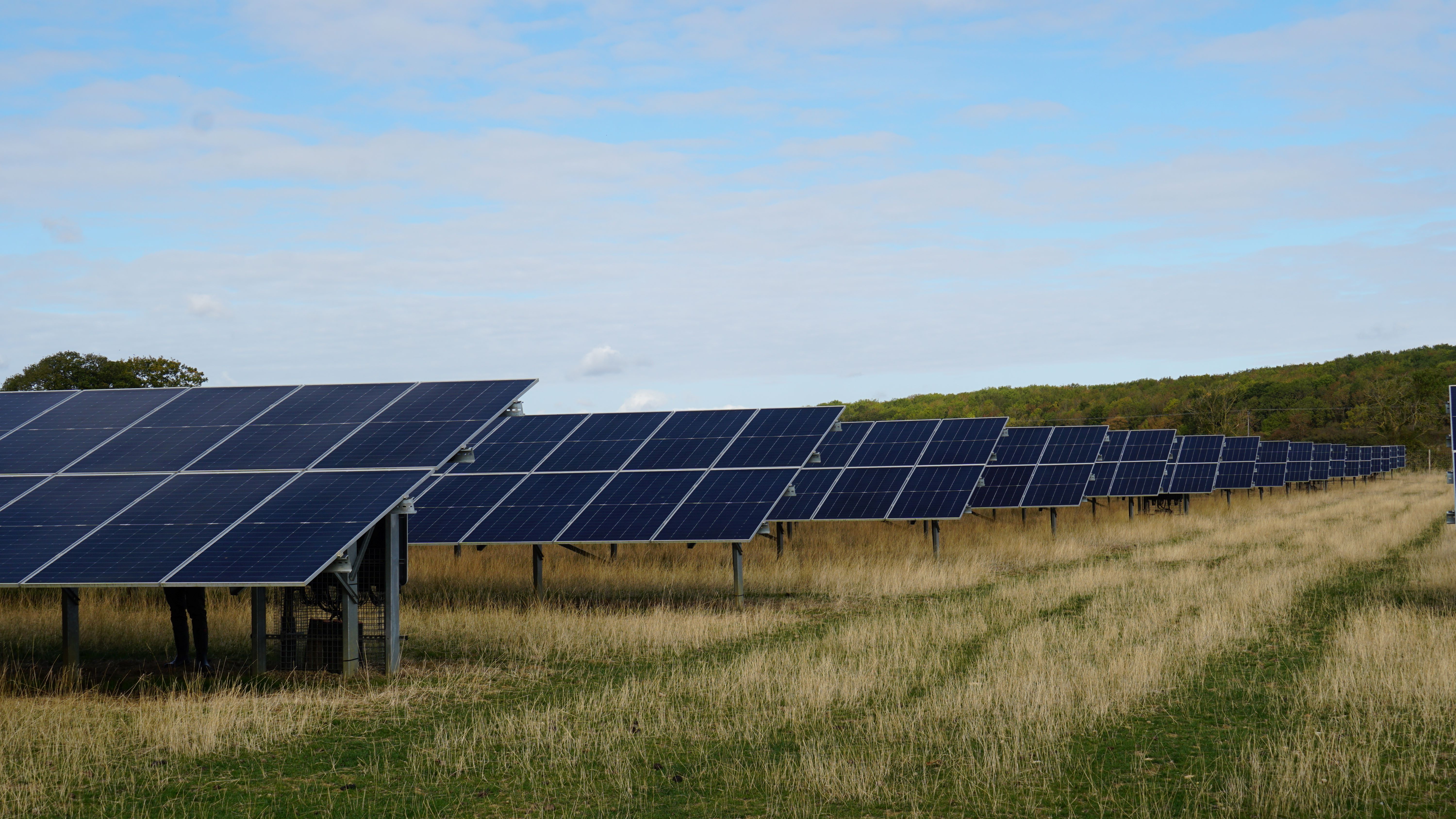
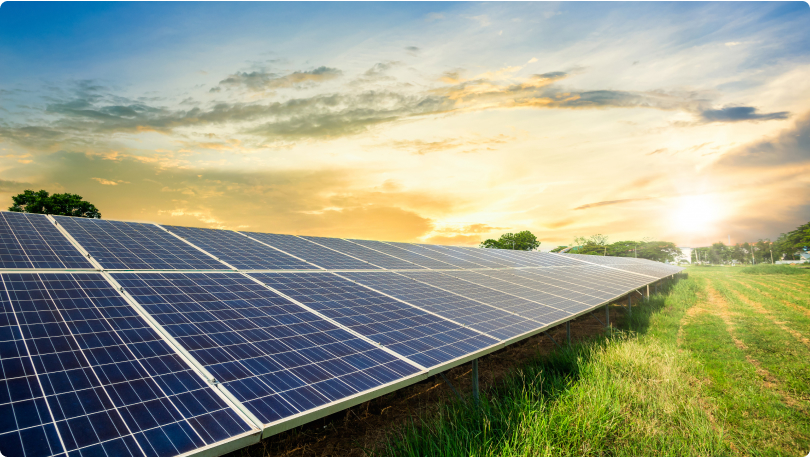
Furthermore, in instances where agricultural land is utilised, ongoing productivity can be preserved through the implementation of on-site sheep grazing. This approach ensures that the land continues to serve a beneficial agricultural purpose whilst accommodating the needs of the development. Similarly, the temporary steel piles which support the PV panels only occupy a minimal footprint of the land available, and can be easily removed allowing the land to be restored.
Community engagement
Engaging with the local communities where the projects are located is a fundamental component of our project development process. DRD consistently adopts a two-phase consultation approach to ensure that community perspectives are meaningfully integrated into every stage of our work. The preliminary phase focuses on gathering initial feedback and local knowledge from both the local community and relevant stakeholders. This plays a role in shaping the design and the development of the project. In the second phase of consultation, we present how this feedback has been incorporated into the evolution of the project, whilst continuing dialogue with the local community. This approach ensures local needs and priorities are identified early in the process and then reflected in the development and operations of each site.
Strategic site selection
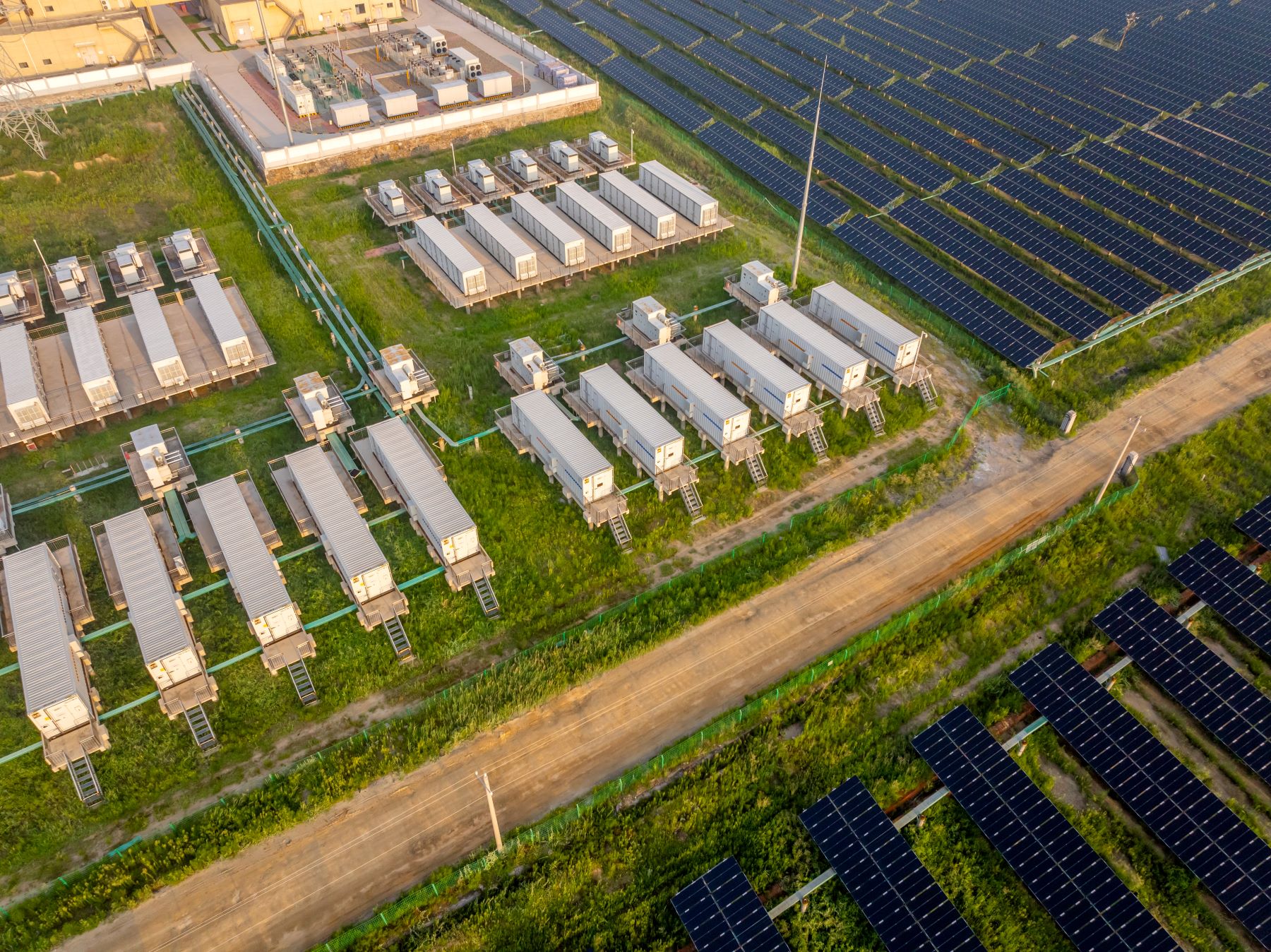
To select the final project location, we must identify a technically and commercially viable Point of Connection to the grid network. To achieve this, and to minimise environmental disruption, the projects require land within an appropriate distance of a potential Point of Connection, called a “Site Search Area”.
Given the challenge of finding suitable points of connection, this means many areas of the UK are currently unsuitable for utility-scale renewable energy projects, as they are simply too far from necessary grid infrastructure. For example, many potential “brownfield” sites may have low environmental value (and so could be suitable for such renewable energy development), but do not have grid connection access, so they would have to be discounted from Site Search criteria.
When a suitable Point of Connection is identified, DRD then evaluates suitable host locations based upon a balance of local policy alignment, technical viability, and environmental stewardship (prioritising areas of non-BMV land) as well as assessing biodiversity, landscape and visual impact, cultural heritage and flood risk.
For DRD to consider developing a site, it must meet stringent criteria to ensure that this balance is correct and that it can contribute meaningfully to the UK’s legal decarbonisation targets. Once a suitable host site has been identified we seek to establish a relationship with the relevant landowner(s) to progress the land agreements, which include the necessary rights and authority to undertake the scheme. These discussions are led from our in-house Land Team which is overseen by our Head of Land, Larry Irwin. Agreements will vary in nature depending on what is required to facilitate a project, but typically cover the term of occupation, scope of the project rights, and commercial terms as well as the necessary provisions for what happens at the end of the project life in order to return the land to its former use.
Regional considerations in site selection
Finally, regional context also plays an important role in our decision-making. Focusing on areas with supportive planning frameworks and strong local engagement enables projects to progress both efficiently and responsibly. Concentrating developments within a region creates opportunities for local economic benefits, including jobs during construction and ongoing maintenance roles.
Once operational, these schemes help reduce carbon emissions and deliver biodiversity enhancements, reinforcing our commitment to sustainable land use and long-term environmental stewardship.
If you would like to find out more about Downing Renewable Developments and our approach to site selection, please get in touch.
-
1 Solar UK, June 2024, FactSheet: Solar Farms and Agricultural Land, https://solarenergyuk.org/wp-content/uploads/2024/06/FactSheet-Solar-Farms-and-Agricultural-Land-2024.pdf
2 Department for Environment, Foodand Rural Affairs, UK Food Security Report 2024, https://assets.publishing.service.gov.uk/media/6756e300a63e1781efb877a1/United_Kingdom_Food_Security_Report_2024_11dec2024_printable.pdf

.png)



.jpg)


.jpg)


.jpg)


Related articles

Powering the future: How renewable energy can sustain the data centre boom
Powering the future: How renewable energy can sustain the data centre boom
Downing Renewable Development's approach to site selection in the UK
Downing Renewable Development's approach to site selection in the UK
%201.png)
DRD is a trading name of Downing Renewables Developments LLP (a private limited liability partnership with registration number OC439748). DRD is not authorised or regulated by the Financial Conduct Authority, (“FCA”). As such, clients will not be afforded the protections available under the rules of the FCA and will not be eligible for compensation under the rules of the Financial Services Compensation Scheme (“FSCS”).
